SUNDAY SHUTDOWN #32 Collagen
Collagen supplements are relatively new to the market and claims about health include maintaining a healthy gut, glowing skin, improved mood as well as promoting healthy hair, nails and skin. It comes in the form of tablets, drinks, topical creams, bars and powders.
With our skin starting to age from our mid 20’s onwards, many are actively freaking out about lines and wrinkles and will do anything to stop it.
Get the basics right first
Before you even think about a supplement, it’s worth asking whether you’ve nailed the fundamentals, because no amount of collagen powder will out-perform these:
- A proper sleep routine (this is when your skin, muscles, brain repair themselves)
- Daily sunscreen, all weathers
- Regular exercise
- Staying hydrated which means drinking water regularly and taking an honest look at your alcohol consumption
- Plenty of fruit and vegetables
- Adequate daily protein intake
Collagen isn’t a bandaid. If your diet, sleep and sun protection aren’t sorted, adding a collagen supplement on top is like putting a plaster over a leak instead of fixing the pipe.
Not all collagen is the same
There are actually several types of collagen in the body, but the two you’ll see most in supplements are Type I and Type II. Type I is the most abundant in the body and is linked to skin, hair, nails and bone. Type II is found mainly in cartilage and is the one more associated with joint health.
This matters when you’re choosing a product: marine collagen is Type I only, so it’s marketed mostly around skin, hair and nails. Bovine collagen contains both Type I and Type II, so it’s the one you’ll more often see marketed for joint support as well as skin.
What does the newest research say?
It’s worth updating this since I first wrote it, because the evidence base has actually moved on. And whilst there is still an abundant amount of research carried out in a lab setting there is some decent human data from the real world too.
A 2025 umbrella review pooled findings from 16 systematic reviews covering 113 randomised controlled trials. There were almost 8,000 participants looking at collagen supplementation across skin, joint and other health outcomes. It found high-certainty improvements in skin elasticity and hydration. Further to this meaningful reductions in osteoarthritis pain and stiffness scores were seen with the benefits appearing to build the longer supplementation continued. It’s worth noting the review also flagged that skin roughness and wrinkle depth specifically didn’t show a significant improvement, so the story isn’t “collagen fixes wrinkles,” it’s more “collagen may help with hydration and elasticity.” Cardiometabolic outcomes (like cholesterol, blood sugar and blood pressure) were mixed and didn’t show consistent benefit.
It’s also worth flagging that most of the individual reviews included were rated low to critically low quality by the researchers’ own quality assessment, so the certainty of these findings, while improved since 2019, still comes with some caveats.
Whilst on the topic of collagen and the fact it is massively hyped up in relation to skincare I would recommend not only looking at your nutrition first but also your skincare routine, how much product you are using on your face and investing in some guided advice from a reputable professional. In the UK Anjali Mahto is my go to.
My take as a nutritionist…
Where does this leave us? If you’re already sleeping well, wearing sunscreen daily, moving your body regularly, drinking enough water, eating plenty of fruit and veg and getting enough protein in your diet, then a collagen supplement might be worth considering. In particular for skin hydration/elasticity or joint support. But it’s exactly that: an addition, not a substitute. If the basics aren’t in place, save your money and start there first.
We also currently have no information on dose – so the best bet is go with what’s advised on the product you are using.
And what am I using?
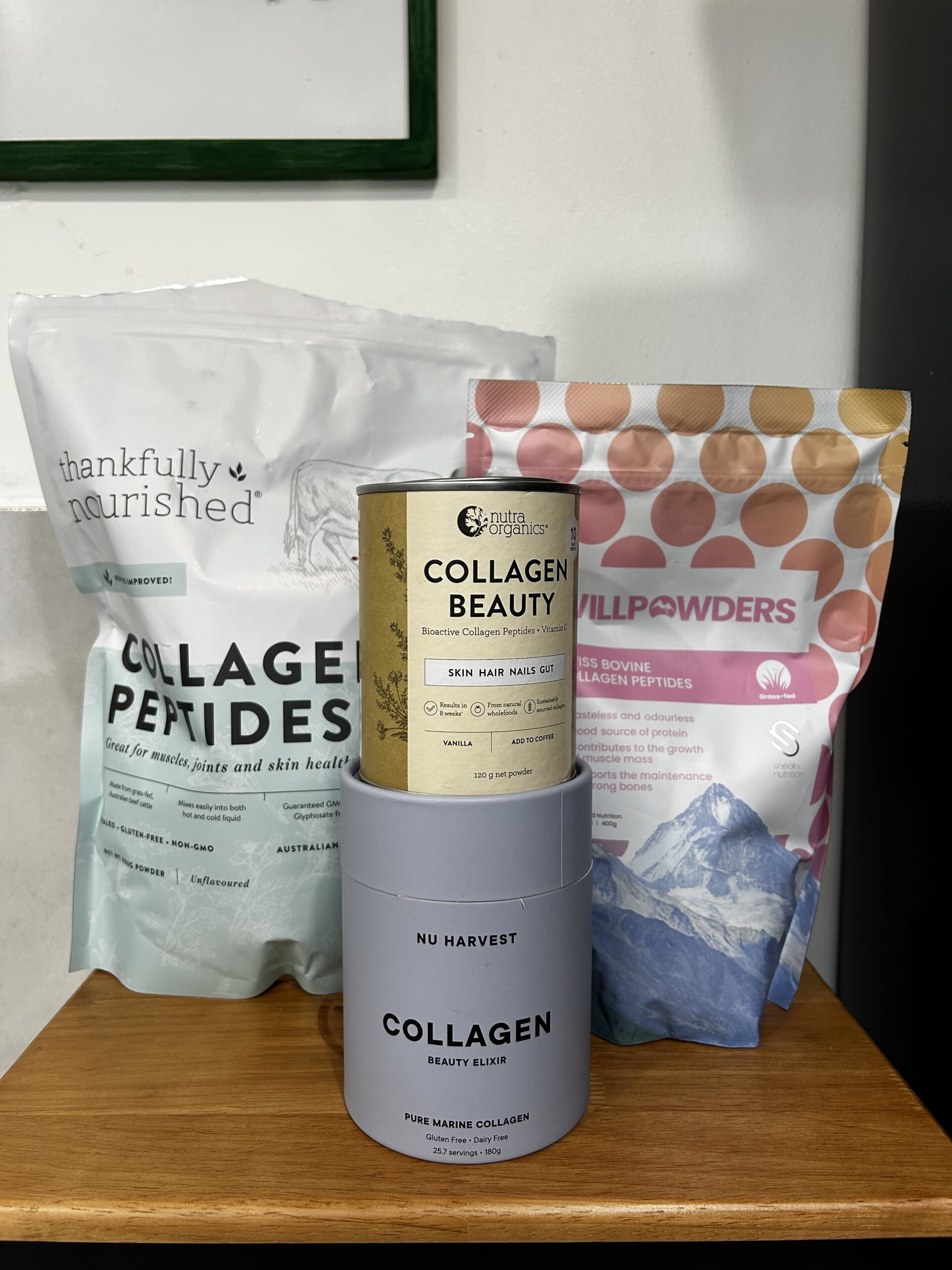
In Australia I’m currently using bovine collagen peptides from Thankfully Nourished. For a marine collagen which might be better suited to those on a vegetarian diet then go with Nu Harvest. They also do creatine too if you need to stock up.
In the UK VitaBright have a really decent product.
In terms of how to use it – dissolve in a drink, smoothie or mix with yoghurt are my go to options.
Also none of the above recommendations are paid or endorsed they are just my own preference. Always try and choose a product that has no added fillers or extra ingredients. More ingredients, doesn’t always mean better. Bovine have both type I and II collagen and marine will only have type I.
And remember – there will always be someone trying to pray on your own insecurities and make money. So if it seems to good to be true, then it probably is. Use your own critical mind and stay curious.






Recent Comments