
All Posts By

Kate Taylor

Singapore

By Food for thought No Comments

3 nights, 2 days, probably the perfect amount of time for us to spend in what can only be described as the hub of continental Asia.

As it was technically the start of our honeymoon we lashed out and stayed at The Marina Bay Sands, I’d heard so much about it and it lived up to expectations. I mean it’s not just a hotel but an entire complex which overlooks Marina Bay and the gardens. Hotel, restaurants, cafes, shopping mall, casino, exhibition centre, it’s all there. And yes the million dollar infinity pool shot was taken, but I preferred admiring all those trying to get the perfect photo, there are photographers employed by the hotel who swim around a take your photo a bit like a theme park ride. Oh, and the wind, no one tells you about that.
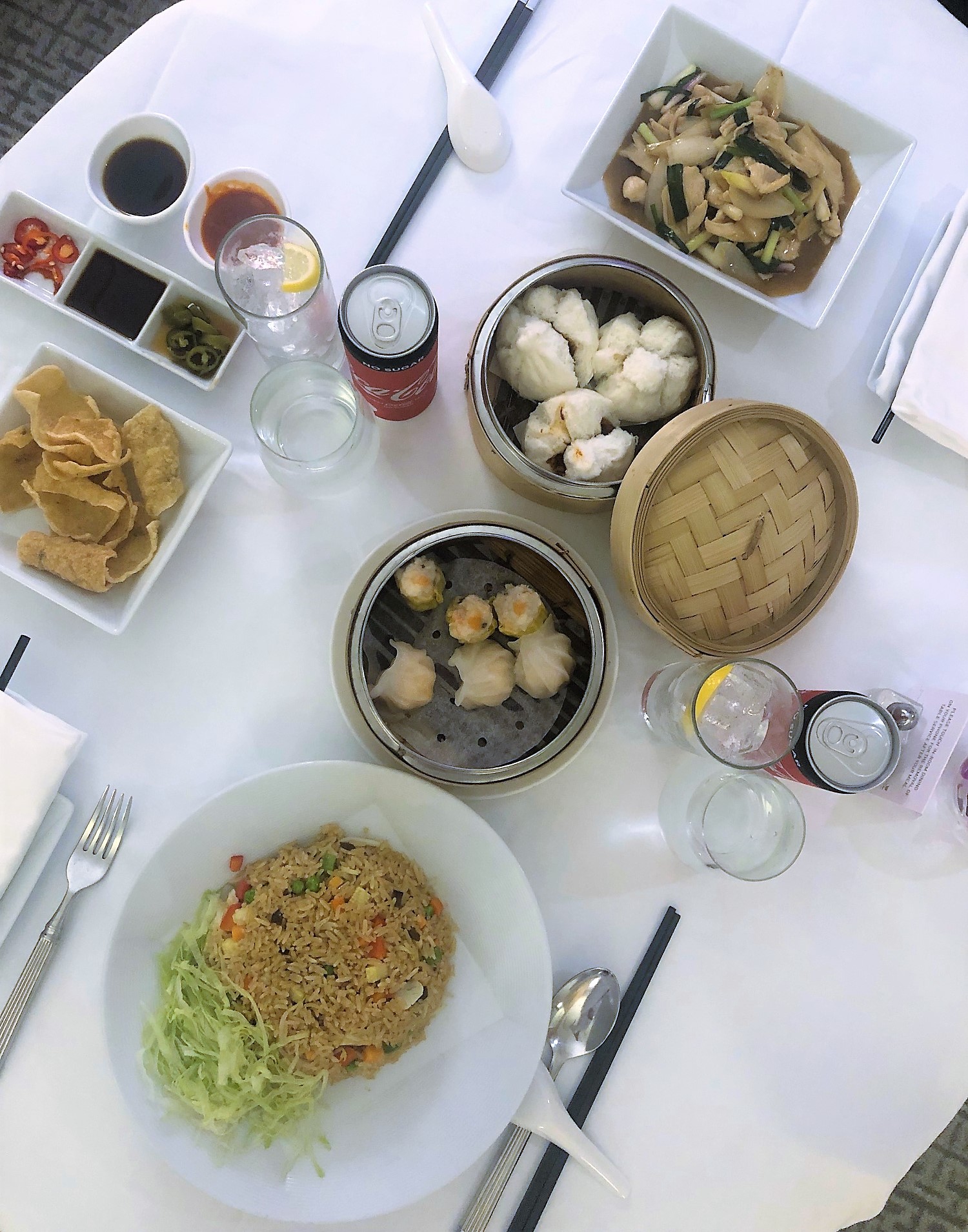
But let’s get to the food. Me and my hubby both love Asia, and living in the UK it’s not somewhere (like Europe) you can get to quickly and cheaply, so when we are there we try to experience as much as possible. Saying that, we arrived early evening on our first night after an eight hour flight from Melbourne, so got room service and planned the next two days adventures. Fried rice, mixed dumplings, ginger chicken and two coke zeros – such rock and rollers we are! Singaporean cuisine is a mix of many different cultures so there is plenty of choice.

Day 1

Breakfast was included at Marina Bay Sands, with three restaurants to choose from we started at Rise, aptly named since it opened at 630am and we were there shortly after. Literally everything you can imagine. Eggs, omelettes, fruit, pastries, toast, noodles, soups, dim sum, juices, cereal, yoghurts, coffee, fish, cheese, continental meats I could have sat there all day and continued to eat. But I didn’t. My tactic at these kinds of buffets is to get very small amount of everything I feel like so I don’t feel too full but satisfy the fact I want to try it all! I know noodles at breakfast might seem weird, but not for me. In fact, on the plane to Singapore we both said “now we get to have noodles and rice for breakfast”. Cringe but true.

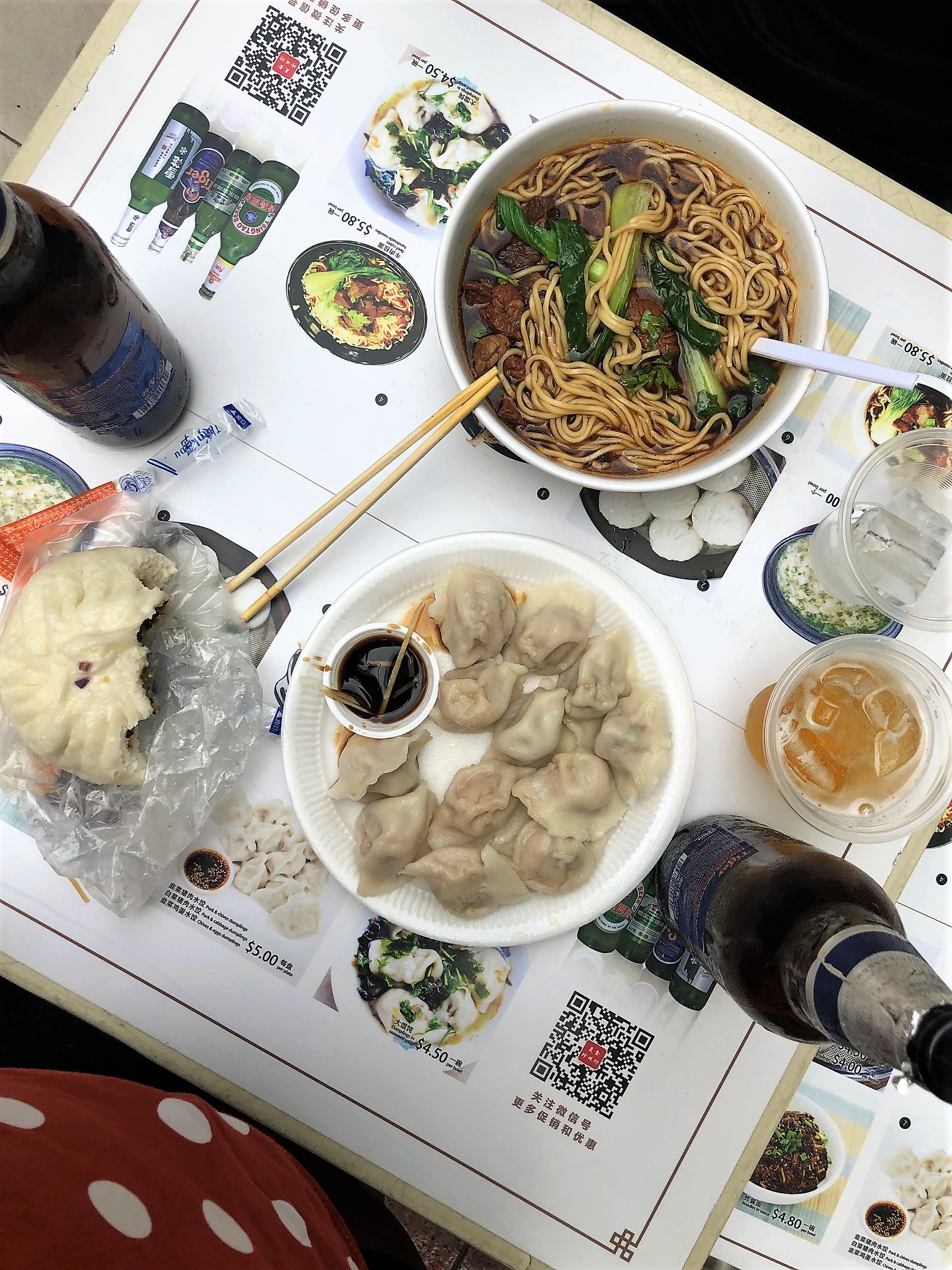
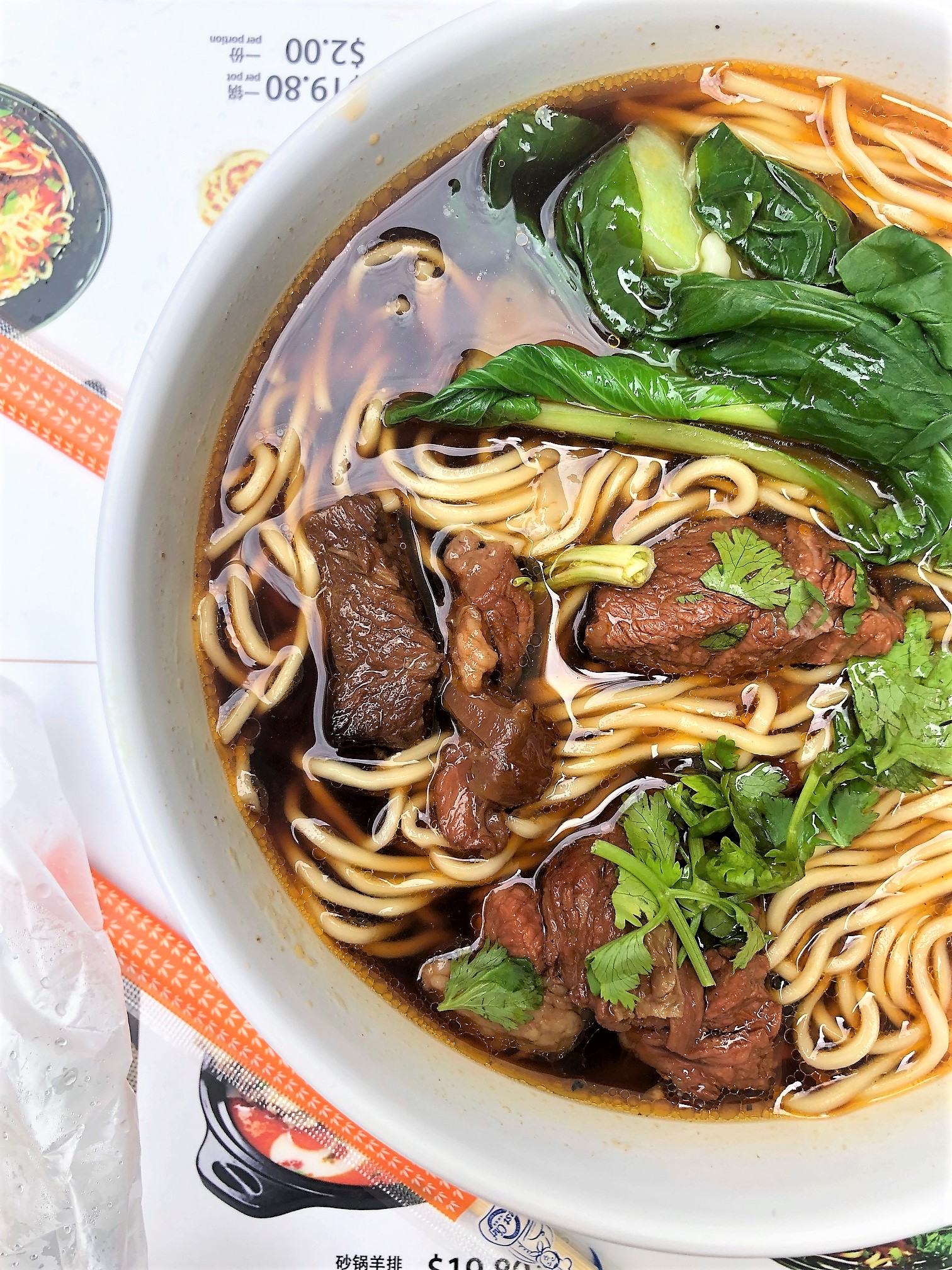
We planned to skip lunch as we weren’t hungry, until we stumbled across China Town. Food stalls everywhere, as well as jewellery, beauty and travel agents. The food stalls are filled with lots of variety. Bao buns and dumplings as far as the eye can see. Pigs heads, intestines and trotters also on display, which for many of us may seem slightly odd, but it’s great this culture eats the entire animal, something we in the western world should do more of. We throw too much away. Food standards are pretty much non existent but just embrace it, use your head and your gut that’s what its there for, common sense. For lunch we dined on dim sums, a pork and chive bao and beef noodle soup accompanied by two Tiger beers.
  

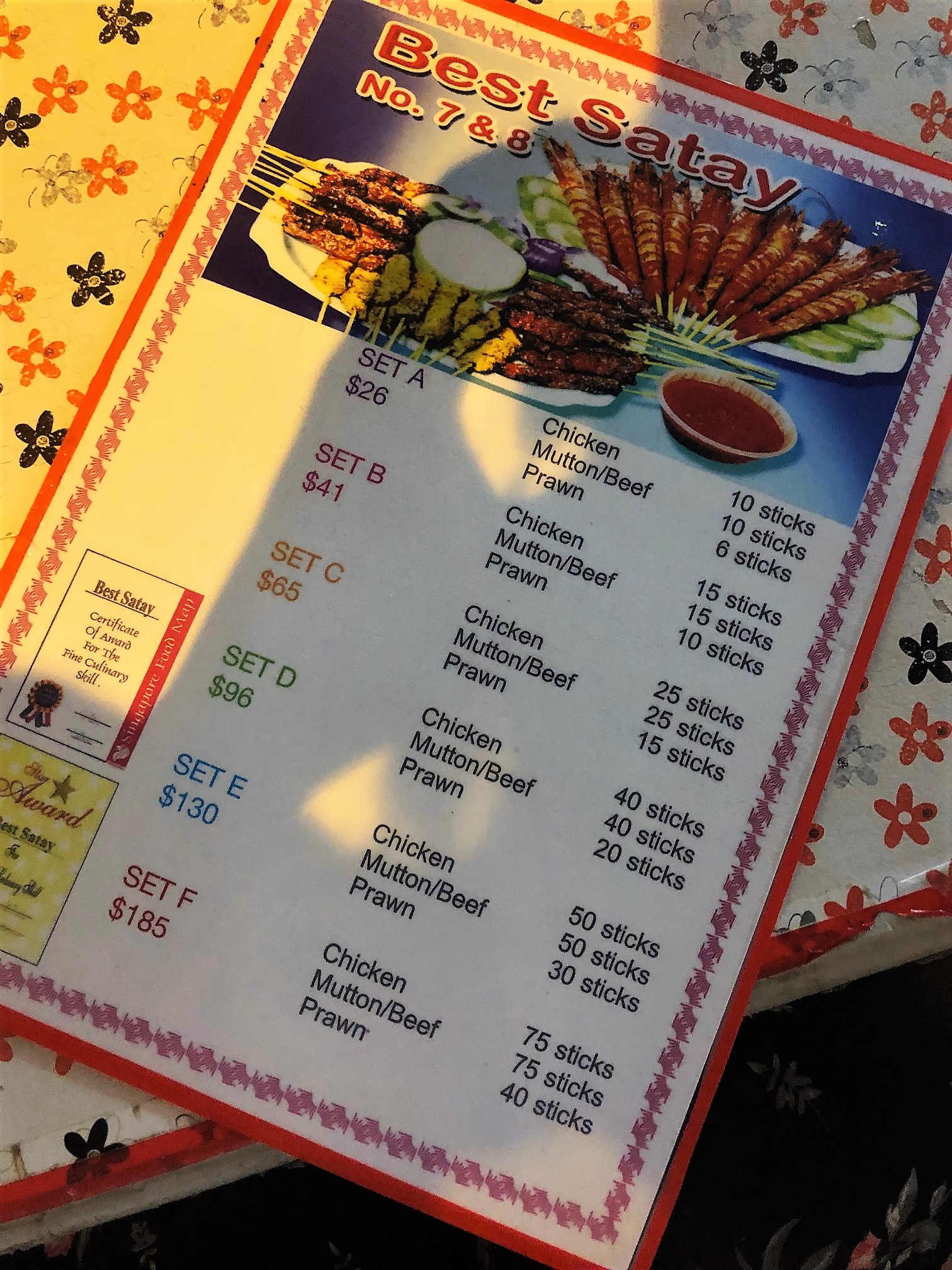
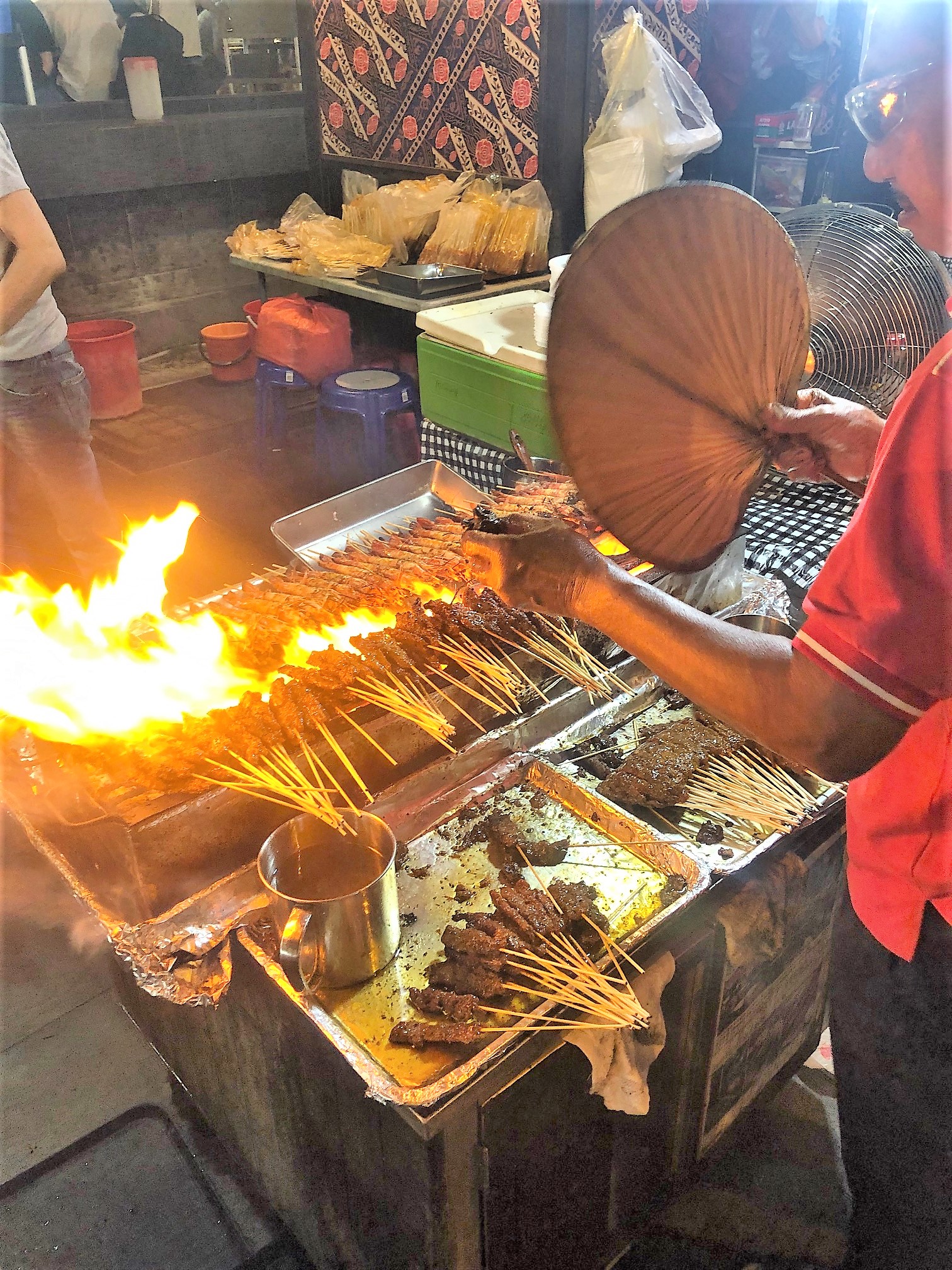
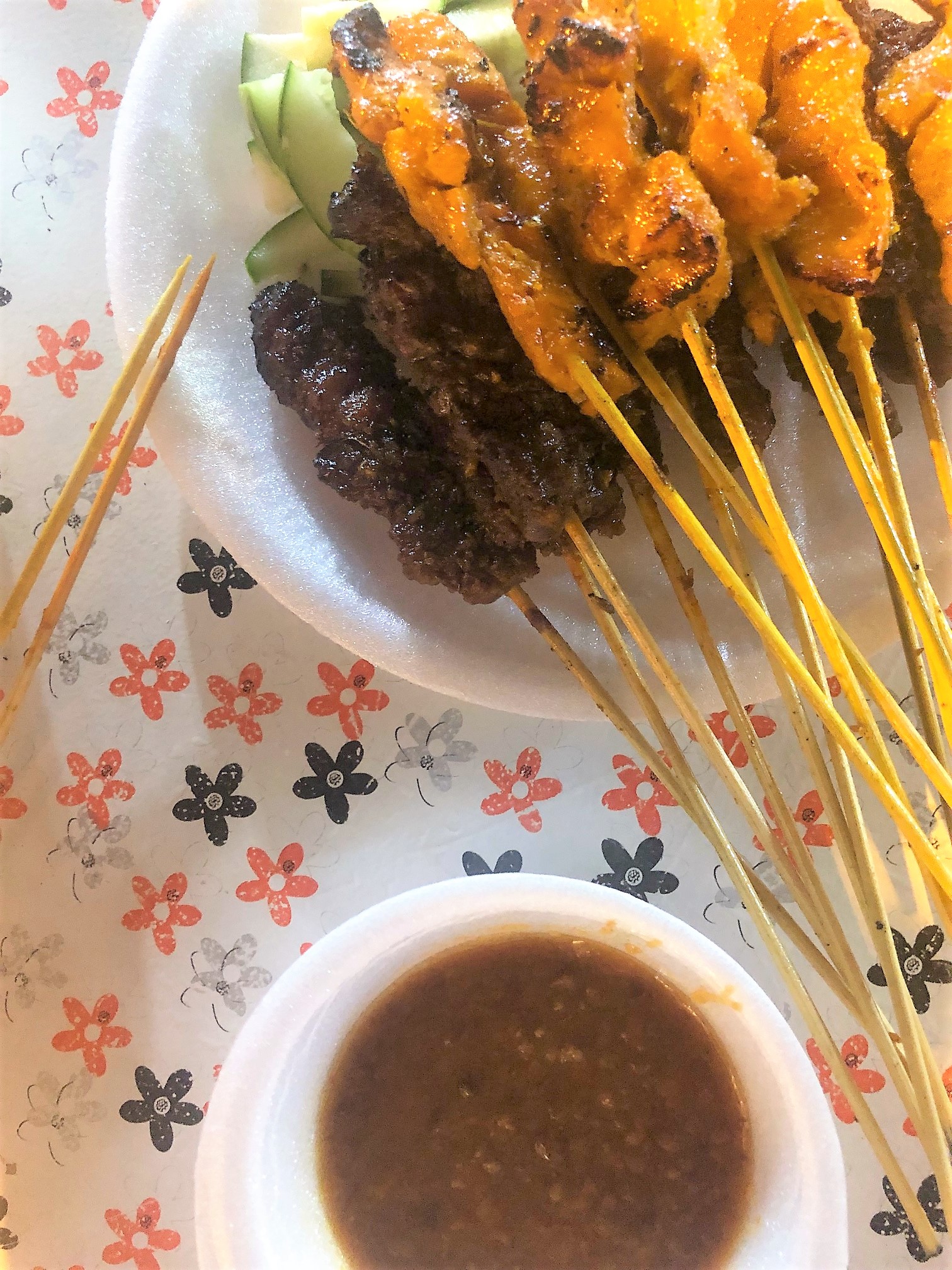
My sister in laws friend lived in Singapore for a few years so we had some hot tips from her so headed to Lau pa Sat that evening. A food market in downtown Singapore with an entire street dedicated to satay. All the stalls are in a line and numbered, you just sit outside the one you like best, they bring you a menu and you order. The beer is poured by the Tiger ladies, they come around and you pay them separately. We just went for the basic satay package, chicken, mutton and prawns. Basic but so flavoursome, the prawns are whole so get ready to peel. Useful tip, they don’t give you napkins, but there are ladies walking around and selling them, clever! Be prepared to leave with your clothes smelling of the wonderful barbecues which go all night. It’s totally worth it. And number 7 & 8 are the best satay – and that’s also the name of their stall.
  

Day 2

Breakfast at Adrift, similar to the day before but a little more, posh shall we say. We again opted for noodles, and an omelette and I also had a poached egg with smoked salmon on half an English muffin. Fruit consumption at breakfast has almost been a daily occurrence and today I tried longans just like lychees with some dragon fruit and watermelon. Eat the rainbow, done.
Lunch was a shared banh mi by the pool, hotel food. Mediocre but better than we both thought.

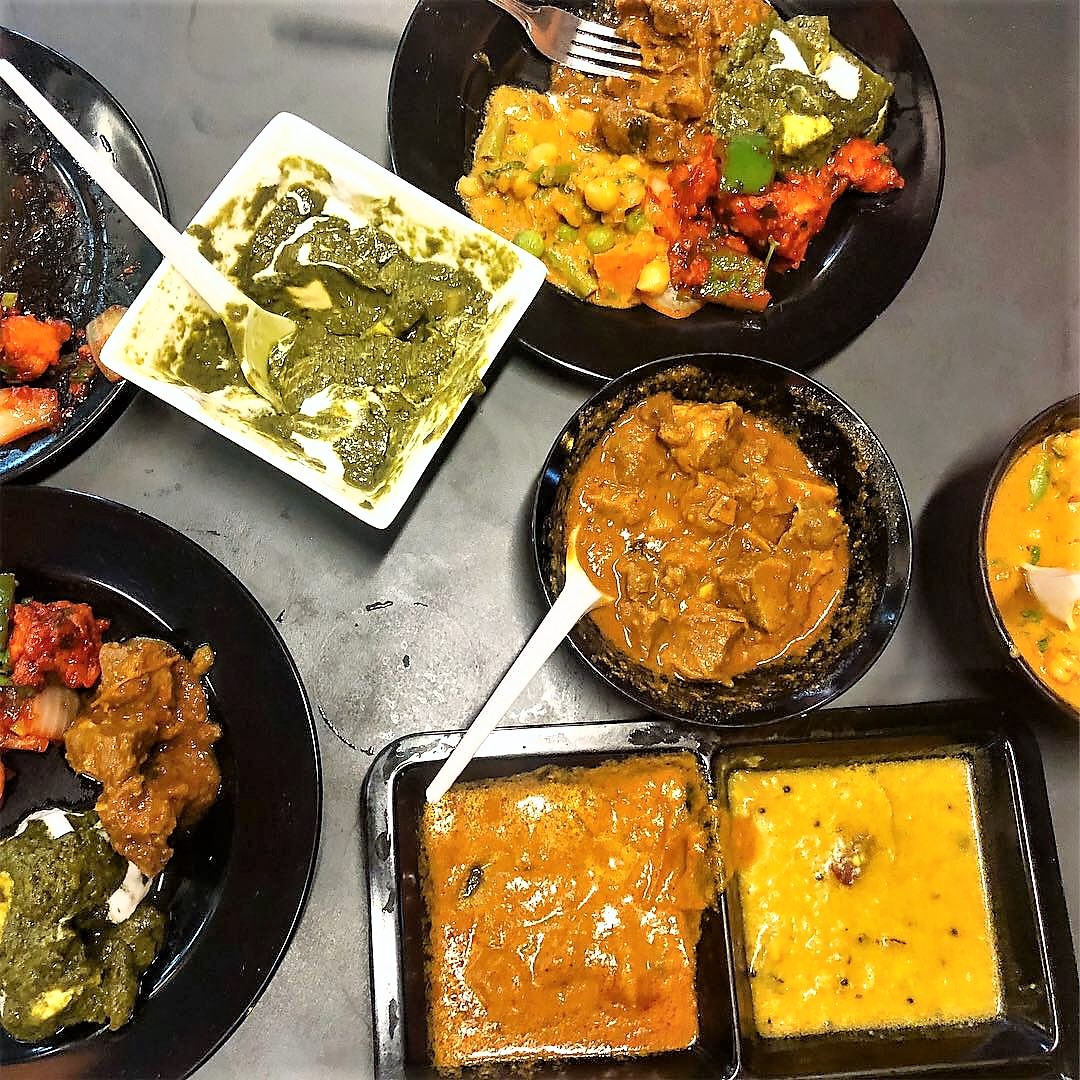
Our final night we visited Little India. The Tekka Centre there is the food market and we would have eaten here except for the fact we walked into the raw meat and fish entrance and it turned us both off, we just couldn’t get past it. Not to worry though we took a short walk stopped for a beer and discussed our options. We ended up at RW Selmor. Good choice. We started with veggie samosas, I also had a masala tea as the locals were drinking it and I wanted to sample the sweet goodness. We then ordered a plethora of different things, both agreeing the mixed veg curry as the winner. The mutton came in a close second and the cheese prata which came with accompanying dhal was tasty too. That being said, the dishes came out with plastic spoons and it just made me sad. The fact is that whilst we in the UK are doing so much on the single use plastic front, this part of the world isn’t there yet.

Tips for eating on the street: get it out of your head you’ll get sick. Choose places that are busy, that also have locals there too. The level of cleanliness is never going to be what you are used to so don’t compare it. We also took before and during our trip a probiotic, whether or not that helped I don’t know but emerging research suggests it can help. Boots do a pack of 30 for £8.99, do yourself a favour and get some.

Top sights

Gardens by the Bay – you can pay to enter the conservatories but even just wandering round the gardens themselves is truly beautiful.

1Altitude Bar for the view only. It’s the tallest bar in the world, and FYI it’s free entry for women on Wednesdays which as the day we went! The amenities and drinks leave a bit to be desired.

Sentosa is Singapore’s theme park on its own island, aimed at families you can climb to the top of the Merlion and walk to the southernmost point of continental Asia. Get the cable car over and then if you get the monorail back you don’t have to pay. Well I think you are supposed to, but we just sneaked out! The cable car also goes over to Mount Faber Park which is lovely to walk around.

Marina Bay Sands – if you aren’t staying there then still visit, and go to the top for a drink. Only guests can swim.

Hawker food centres are great if you are into food, find one and just wander round. You’ll get bowls of noodles for a couple of quid.

Have a Singapore Sling at Raffles, it was closed for refurb when we were there so I ended up having mine in Malaysia so no recommendations there.

Also be prepared for just how many oil tankers there are on the sea and horizon and the humidity to hit you like a brick. Permanent sweaty clothes.
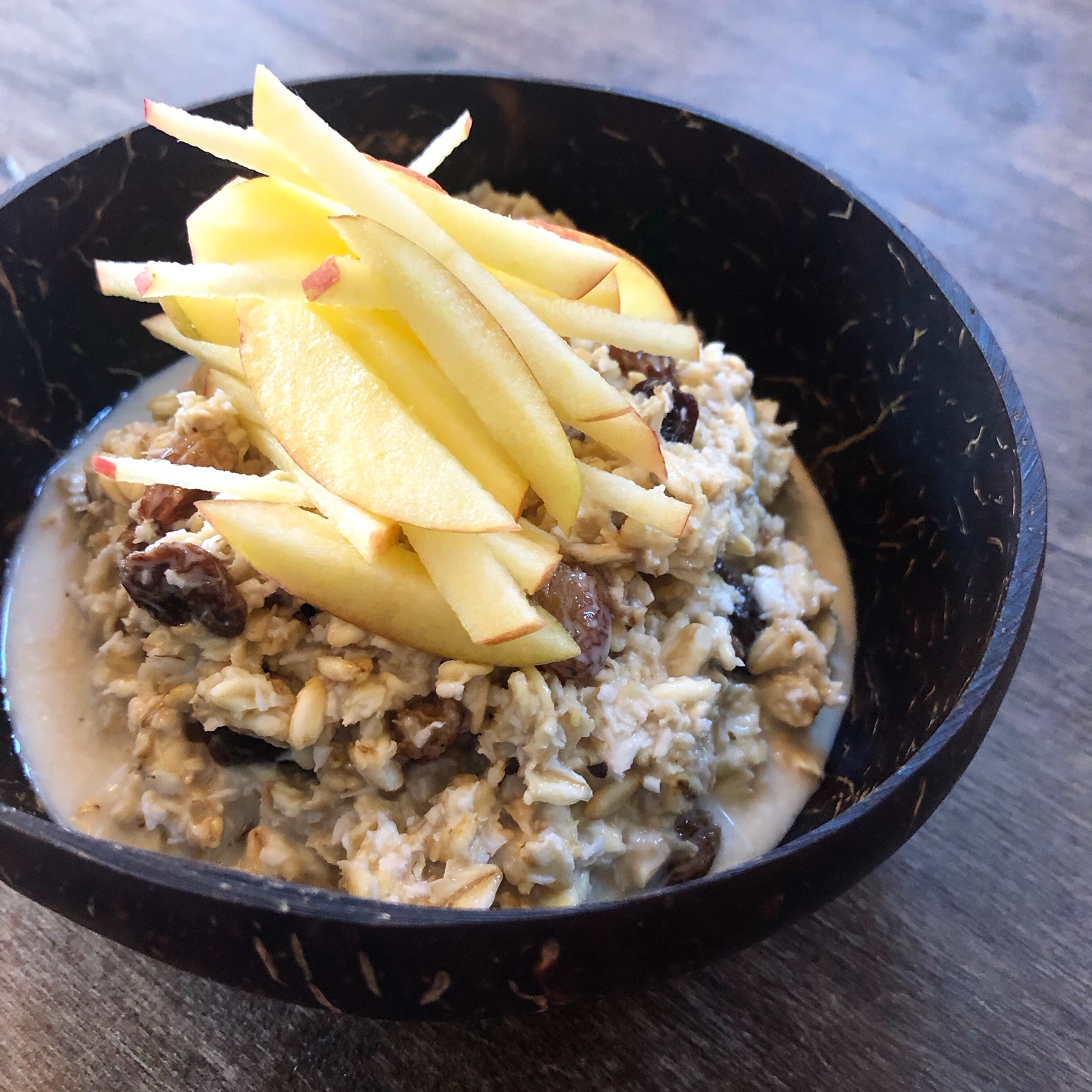
 

OVERNIGHT COCO OATS

By Recipes No Comments

Makes 2 portions

Overnight oats are one of those foods that are always in our social media feeds (well mine anyway), the ones the everyone takes photos of and claims they are revolutionary. To be honest, they are simple, cheap and convenient which I why I have created this recipe. So many of us are time poor and this takes less than 3 minutes to make and put in the fridge. And if you don’t like cold oats, just warm them up the next morning.

INGREDIENTS
100g oats
20g desiccated coconut
300ml oat milk (you can use any milk)
30g raisins/sultanas

METHOD
Add everything into a container
Mix and seal with a lid
Store in the fridge overnight
The next day eat them all up – also top with any fruit of your choice or eat as they are

They’ll keep in your fridge for 2 days

Low calorie sweeteners

By Food for thought No Comments

It’s something I hear all the time, “yeah but they are just as bad as sugar aren’t they?” Not entirely no. There is usually a point made about them being artificial, or full of chemicals or that they can cause you to gain weight. Lots of things are artificial, everything is made up of chemicals and in most cases there are many other factors that impact our weight before sweeteners, however we are pretty hung up on how apparently harmful they actually are.

Low calorie sweeteners come in many forms, aspartame, saccharin and stevia are probably the ones most people have heard before. All are around 200 -300 times sweeter than sugar itself, aspartame and saccharin are artificially produced and stevia comes from a plant originating from South America (it still does undergo a small amount of processing though). These and many others are used to sweeten products, namely soft drinks but also cakes and often protein bars which we see becoming more mainstream in individual diets. They are a calorie free solution to food and drinks which are usually very low in physical nutritional quality. Not only that, low calorie sweeteners don’t have the detrimental effect on our teeth that sugar does.

Like most things in life, nothing is straightforward so here goes, keeping it short and sweet (excuse the terrible pun).

Harmful to human health? The research currently says no. If that’s all you needed to know you can stop reading now, but I’ve broken down the science a little bit further for those avid readers.

Without a doubt there have been many studies on low calorie sweeteners with the majority of them, in animals. And there’s the first point to reference, animal studies can’t be applied to humans, we are different species. The studies which started the concern were published in the 1970s and linked the high doses fed to rats with the development of bladder cancer(2). This has since shown to be incorrect as rats have an increased risk of developing bladder cancer due to their physiology. What is also important to note here is studies in animals are usually conducted where the sweeteners are given at an almost toxic level, far higher than we would ever consume. Only very small quantities of sweeteners are consumed in human diets, as an example around 1/10g is used in place of 35 grams of sugar, which is roughly the amount you’d find in a can of CocaCola(1).

For any items to enter the food chain, they have to be certified as safe by the European Food Standards Agency (EFSA) – which might I add could potentially change in March 2019 due to Brexit so an update will follow then if it’s needed. They must be safe for human consumption and have maximum limits set for products and ingredients based on average consumption.

There is however, emerging research on low calorie sweeteners in the area of gut health and their potential role in altering our gut microbiota (that’s all the bacteria that make up our gut and help us to stay healthy). Again, the research has been completed in mice and shows that low calorie sweeteners can disrupt the gut microbiota and result in impaired glucose tolerance – which means the body’s ability to regulate glucose (sugar) (3). But until this can be show in humans, we just need to keep an eye on this one.

They can help those trying to lose weight reduce their calorie consumption. However, this only works if the individual is educated in their food choices. It doesn’t mean it can be replaced with something else high in calories at another point during the day.

There is no evidence to suggest they impact dental health. Sugar sweetened drinks and other items such as cakes and biscuits high in refined sugar in the UK are contributing to the 45,000 multiple teeth extractions in under 18-year olds which were carried out in England and Wales in the last year (4). No further comment needed there.

All of the above taken into account we are still a way off the public perception of artificial sweeteners changing. There is still very much a body of thought out there which deems them to be socially unacceptable. When in reality for almost a third of adults who significantly need to reduce their energy intake to lose weight they shouldn’t be.

So in short, as part of a balanced food and beverage intake then I have no issue with my clients consuming products which contain them. If it helps support their long term goal of losing weight then that’s a positive step. If consumption is in excess then this could pose health risks, (but too much kale would also do that) by excess this would mean litres and litres of diet fizzy drinks per day, sweeteners in tea and coffee and a couple of protein bars too. And finally it’s very important not to get into the reward mindset of “well that had no calories so I can have something else instead”. If you are hungry eat, if you aren’t try not to.

And on the horizon for the UK food industry – with calorie reduction being implemented by the UK government are we likely to see more artificial sweeteners in our food products?

References:

  1. Evaluating research by understanding the metabolic fate of difference low calorie sweeteners – Dr Berna Magnuson (Canada) – International Sweeteners Association Conference 2018
  2. MD Reuber. Carcinogenicity of saccharin. 1978 Environmental Health Perspectives Aug; 25: 173–200.
  3. Nettleton JE, Reimer RA, Shearer J. Reshaping the gut microbiota: Impact of low calorie sweeteners and the link to insulin resistance? 2016. Physiology & Behavior. Oct 1;164(Pt B):488-493.
  4. Local Government Association, December 2018. https://www.local.gov.uk/about/news/180-operations-day-remove-rotten-teeth-children,

BUTTERNUT, ROSEMARY & CHILLI SOUP

By Recipes No Comments

Serves 4 as a main

Soup never gets old, it can be as plain or as fancy as you like but it’s a firm favourite for the colder months. This one will warm your soul on those chilly autumn evenings and with a slice of toasted sourdough or two will make the perfect lunch or dinner. It will also keep in the fridge for around 5 days or portion it out and keep in the freezer for one of those nights you get stuck with what to have for dinner.

INGREDIENTS
1 butternut squash
3 sprigs of rosemary
1 teaspoon crushed garlic
1 teaspoon rapeseed oil
1 teaspoon of dried chilli flakes or 1 red chilli
1 brown onion
1 veg stock cube
Salt and black pepper

METHOD
Peel and roughly chop the onion
Remove the leaves from the rosemary stalks and roughly chop
Cut the butter squash in half across the middle and then into rings. Remove as much skin as you can and cut the flesh into chunks
Heat a large saucepan over a medium heat with the rapeseed oil
Add the onion, rosemary, dried chilli and garlic and cook, stirring occasionally for 10 minutes
Then add the butternut squash, season with salt & pepper and stir until combined
Add the stock cube and fill the saucepan with water until all the ingredients are just covered
Simmer for 40 minutes
Leave to cool, then blitz with a stick blender or in a food processor until smooth

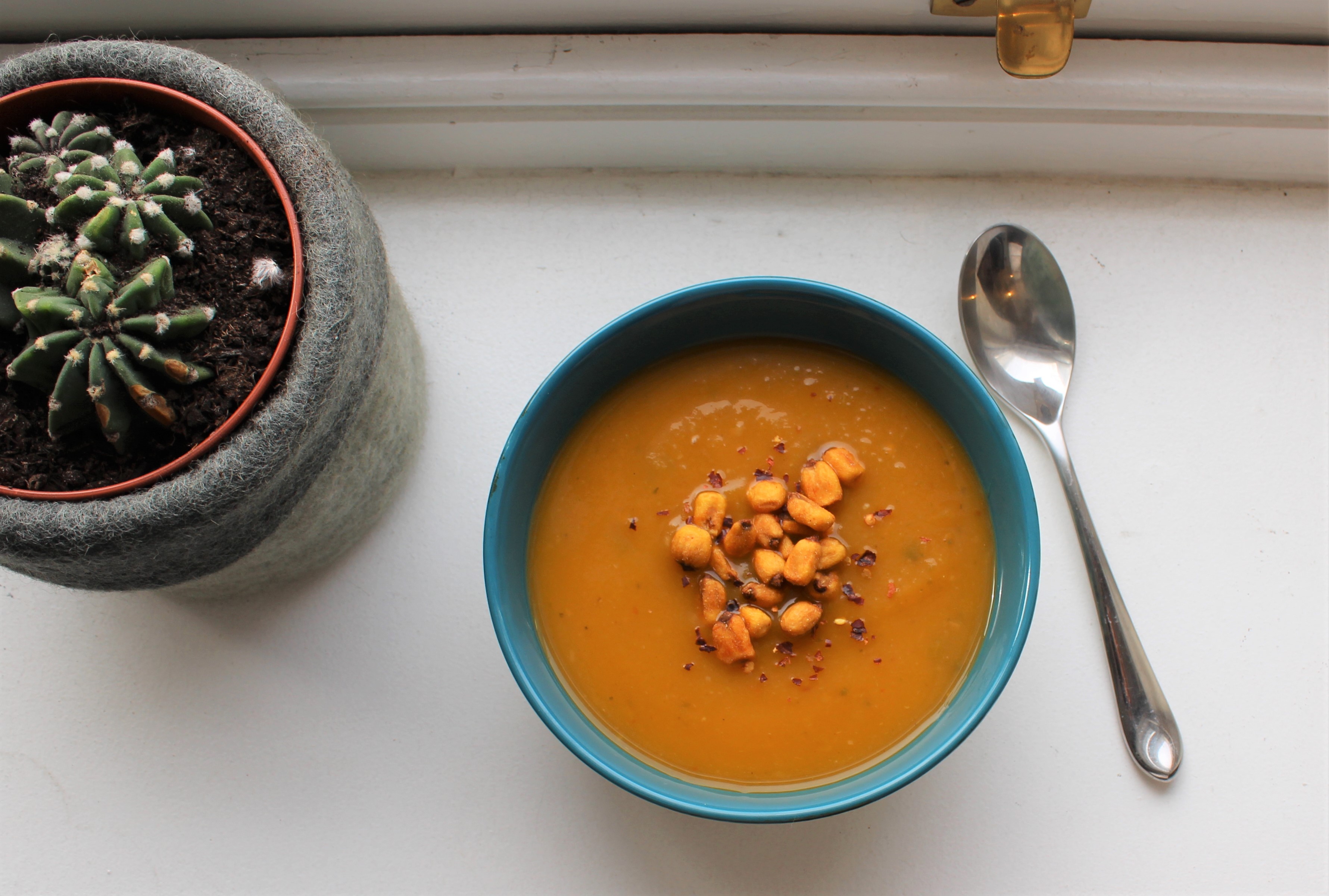
Top with crunch of your choice – anything from dried corn, crushed nuts, desiccated coconut, toasted seeds or my favourite – crushed up tortilla chips

Fat shaming and the normalisation of plus sized bodies

By Food for thought No Comments

This is something that I’ve been thinking about for a while now. And before anyone reading this gets their back up, please read on first! I’ve been pondering on how I pitch it and what to say predominantly because it’s a sensitive subject. It would be hard not to upset anyone. But that’s the point right, someone will be upset because you can never please everyone. I get it. Fat shaming. Being fat phobic. And generally not appreciating those in bigger bodies is not right, it never was, and never will be. I’ve been a victim of it, my friends have and my family too. Diet culture is damaging to self esteem as well as our body in the physical form. But after all that I still feel we may be in danger of normalising plus sized bodies. I’m not talking about generally carrying a bit of excess fat, this is common and something that isn’t generally anything to be concerned about. I’m talking about being significantly overweight or obese. Are we in danger of making it so ok to be carrying large amounts of excess fat that we lose sight of the health implications. And those implications are that 63% of UK adults are either overweight or obese and with that comes metabolic disease, type II diabetes, increased risk of cardiovascular disease and back problems to name just a few. Let’s also not forget our NHS is in crisis. When is enough, enough and how do we make people understand that whilst there is no ideal body, no universal standard for anyone, carrying significant excess weight can reduce your quality and length of life. Yes, some people will naturally be bigger and some smaller, depending on their genetics and lifestyle.

The very recent study by Mattarak published in June this year (2018) does raise some alarm bells. Whilst it’s not overly new in terms of thinking the physical statistics on people underestimating their weight and therefore underestimating their risk of disease is staggering.

  • Underestimating body weight was more common in men and those (of both genders) in a lower socio-economic group.
  • Men were also less likely to be trying to lose weight
  • And those who did underestimate their overweight or obesity were 85% less likely to try and lose weight than those who accurately knew how much they weighed. 85%!!

We need to find a way for everyone to be comfortable talking about weight. No, it doesn’t define us, who we are or what we think. But it can impact how we live.

We need to not make weight the main driver. Of course, it will be part of many peoples journey, but there needs to be other goals, other priorities. Cooking, moving, improved mental health, learning to build new habits. In my private consultations I always encourage my clients to have other goals, than just being weight focussed.

Those promoting nutritional brands, supplements or methods offering a short term fix with no scientific backing need to continue to be called out. So, us as health professionals can keep promoting the right stuff whilst not being bogged down in one stop solutions that don’t work. It’s not ok.

People need to be patient, something we seemed to have lost since social media appeared and technology ruled our lives. Change takes time.

We as health professionals need to be honest with our patients and clients about a subject which is always the elephant in the room yet is causing so much pain to them and to others. We need to be compassionate and help them understand positive changes that can and will help them in the long term. And collectively we need to find a solution which can positively impact those in lower socio economic groups, these are the group of people who need this education the most. #foodforthought

Omega 3: supplement or not to supplement? That is the question.

By Food for thought, Guidelines, Media Responses No Comments

Last week we saw the media share their views on the recent Cochrane review, omega 3 fatty acids for the primary and secondary prevention of cardiovascular disease.

In the UK it’s recommended we consume two portions of fish per week, one which should be oily (mackerel, salmon, fresh tuna, herring, sardines to name a few) to enable us to obtain decent levels of omega 3 fats important for cardiovascular health, brain function and reducing inflammation. Omega 3 fats are essential which means our bodies cannot make them, we must obtain them from our diet. There is no UK dietary guideline for consumption levels of these fats however research suggests one portion of oily fish per week provides adequate amounts. But what if you don’t eat fish, for personal or health reasons? Well, you can either choose other sources, such as rapeseed oil, walnuts and soya products, or take a supplement. Or can you?

Once again we are hit by a headline, not wholly representative of the actual study in question. So here’s a short overview:

This study in question was a meta analysis, where a search criteria is provided and many already published studies are collected based on them meeting or not meeting the criteria. In total there were twenty five studies which made the cut.

In this case the criteria included both genders, across many different continents both healthy and some with pre-existing medical conditions. This is a major limitation of this study (but more on that later). Participants were given a supplement rather than obtaining omega 3’s from the diet.

The review claims to compare the effect of omega 3 supplementation on heart disease risk and death as well as mortality from all causes.

The conclusion was supplementation shows no change in mortality from any cause. But don’t stop taking your supplements yet. Whilst supplementation wasn’t successful in these individuals, it may be because they already have cardiovascular disease. There was no sole comparison of what supplementation can do for a healthy individual. In addition, there was no reference made to the impact of omega 3’s coming from your diet either.

Let’s revert back to the title – Omega-3 fatty acids for the primary and secondary prevention of cardiovascular disease. But it’s not really examining that is it? Because first up it only measures supplementation and secondly prevention would generally mean those without the disease already? Wouldn’t it? It’s quite difficult to claim omega 3 supplements don’t prevent cardiovascular disease if the participants already have it? Perhaps something like “the impact of omega 3 supplementation on cardiovascular risk and all cause mortality in those with pre-existing medical conditions” might be better. Anyway I’m getting a bit sciency now….so moving on!

As always, if you can obtain your omega 3 fats from foods, please do, because you get so many other benefits from them too!

Sources of omega 3

Oily fish: salmon, tuna steak, sardine, herring, mackerel, oysters, anchovies,

Other sources: rapeseed or canola oil, chia seeds, walnuts, flax seeds, soya beans or soybean products

Only resort to a fish oil supplement if you don’t (and can’t) have any of the above in your diet throughout the week. And if you think you may need a supplement make sure you check with your doctor, dietitian or nutritionist for the best one for you. This will depend on your own personal circumstances including things like if you take other medication or think you might be pregnant.

References:

Abdelhamid. A, Brown. T, et al. Cochrane Database of of systematic reviews. Omega-3 fatty acids for the primary and secondary prevention of cardiovascular disease. 18th July 2018.

SPINACH, FETA & CHIVE EGG CUPS

By Recipes No Comments

Makes 12

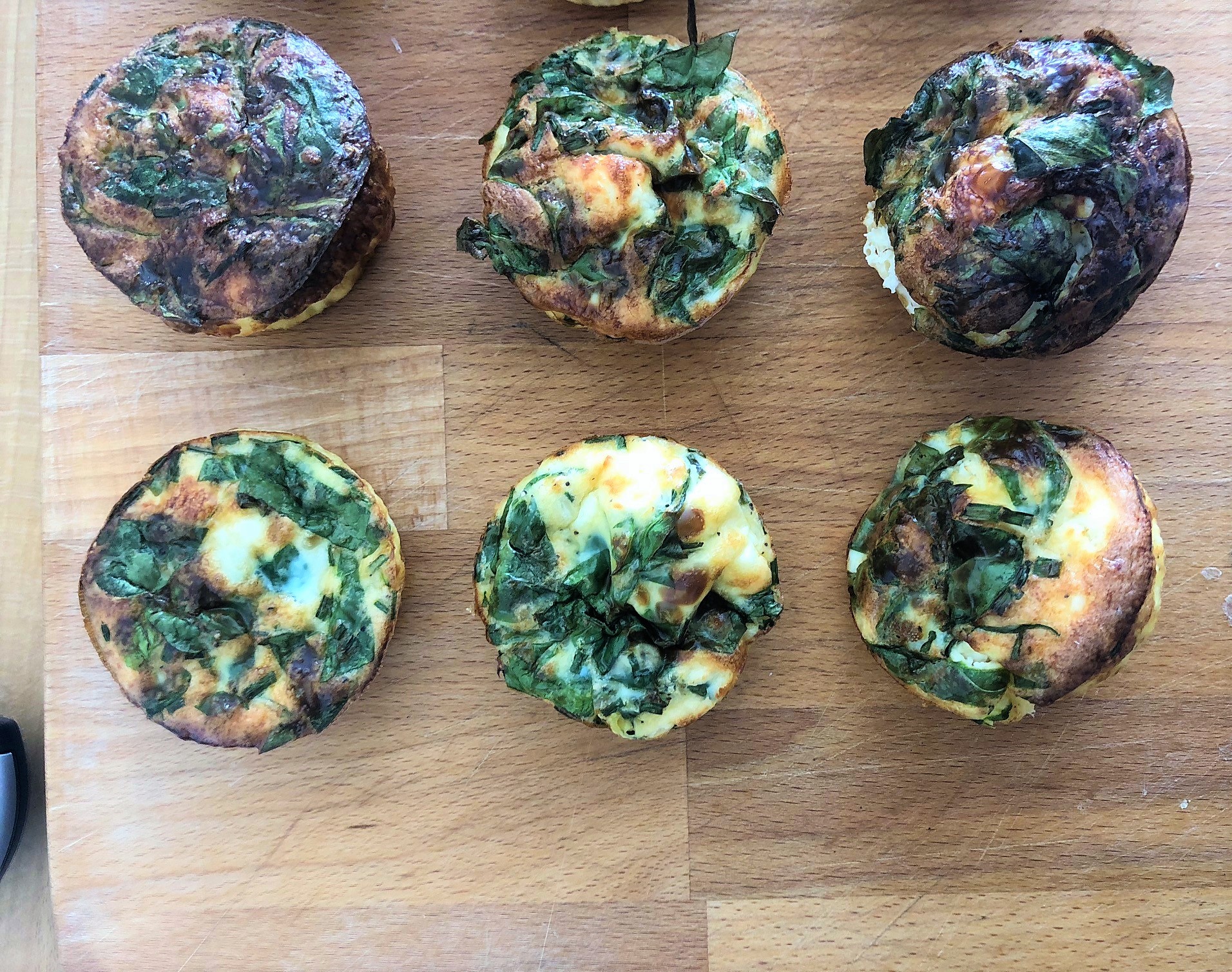
I’m a lover of simple snacks which everyone can enjoy, so I’ve adapted muma oz’s recipe to be a veggie one. Feta and spinach are a well known combo, throw in some chives for added tang and you’ve got the perfect bite! For breakfast or as a snack, around 60 calories each and high in protein, enjoy these ones!

INGREDIENTS
Olive oil for greasing
40g feta
1 tablespoon chopped chives
8 eggs
150ml of semi skimmed milk
40g spinach, roughly chopped
Salt & pepper
1 individual muffin tin

METHOD
Preheat the oven to 200C
Grease the muffin tins with olive oil using a pastry brush
Put all ingredient into a mixing bowl and whisk with a fork
Ladle evenly into muffin tins
Bake for around 20 minutes until golden brown

BROCCOLI, PEA, CARROT & PEANUT SALAD

By Recipes No Comments

Makes enough for 1 as a main or 2 as an accompaniment

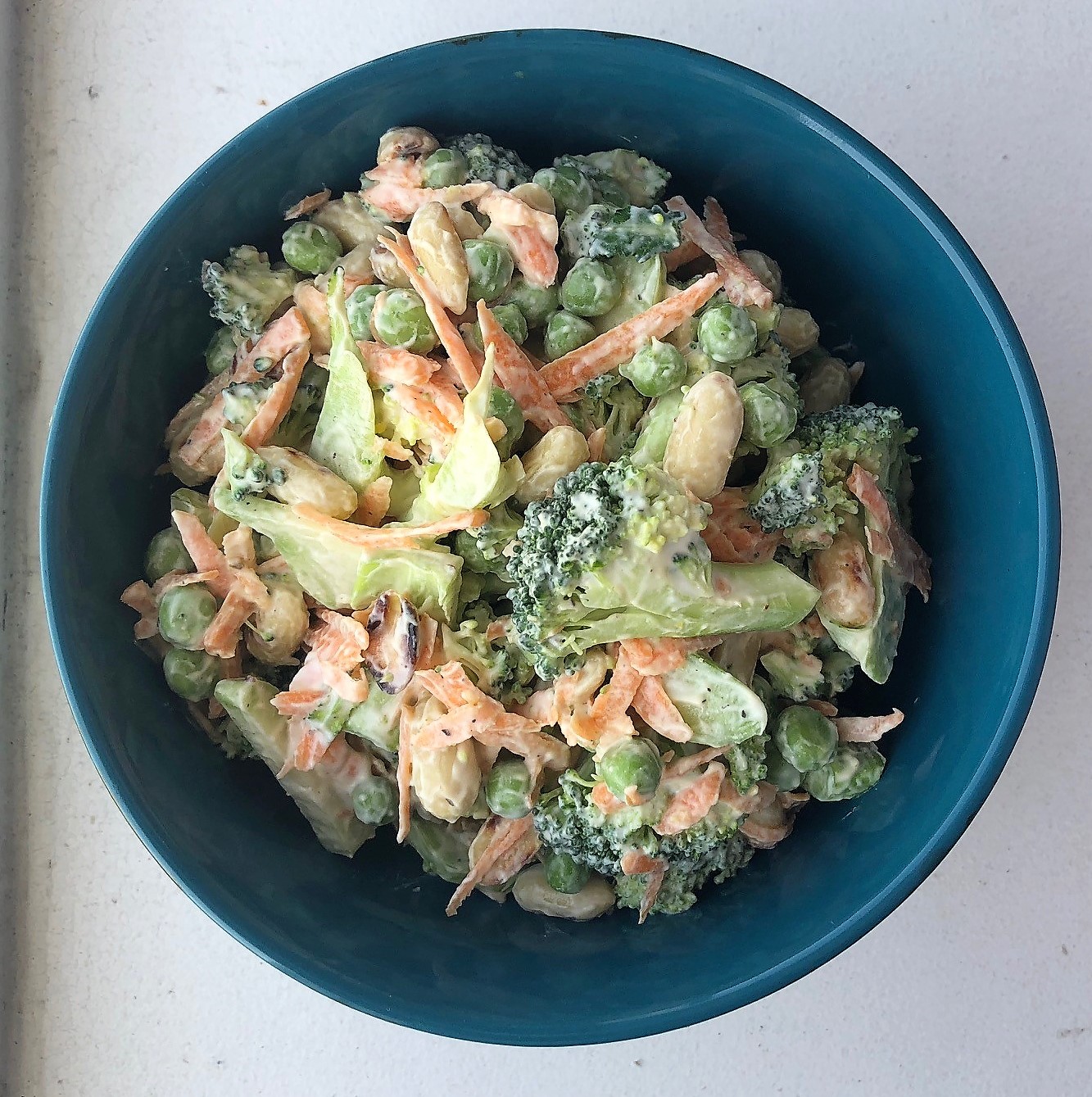
I took inspiration from a BBQ we were at over the weekend where this salad was on the table. It was simple and delicious so I’ve nabbed it for my collection but I added some peas in for extra greenery and protein. As all the veg are raw, they are crunchy and packed with nutrients, it also means it takes about 10 minutes in total. I would literally eat a whole bowl of this but equally if you are cooking for two it’s delicious with a piece of grilled fish.

INGREDIENTS
130g broccoli (half a small bunch)
80g fresh peas
40g peanuts
80g crème fraiche (reduced fat)
40g grated carrot, (1 small)
Zest of half a lemon
Salt & pepper

METHOD
Roughly chop the broccoli into bite sized pieces
Place a small pan on the hob on low and toast the peanuts. Ensure you keep an eye on them and shake every 30 seconds or they’ll burn. To toast it should only take around 3 minutes in total
Pod the peas (or defrost frozen if you prefer)
Mix all the dry ingredients together in a bowl and season with salt and pepper
Lastly stir through the crème fraiche

Food in Morocco part 1 – Marrakech

By Food for thought No Comments

We’ve been getting itchy feet about going on holiday as it’s been quite a while. I’m such an avid traveller that having such a big break between trips actually made me extra excited about this one. I took full advantage of a week away from social media, only responding to messages from friends and family. It really helped. We all know the accounts that are filled with sunny beaches and feet by the pool whilst we are hitting the daily grind, no one needs that in their life. So instead, here’s just a quick summary of our trip with all the foodie highlights.

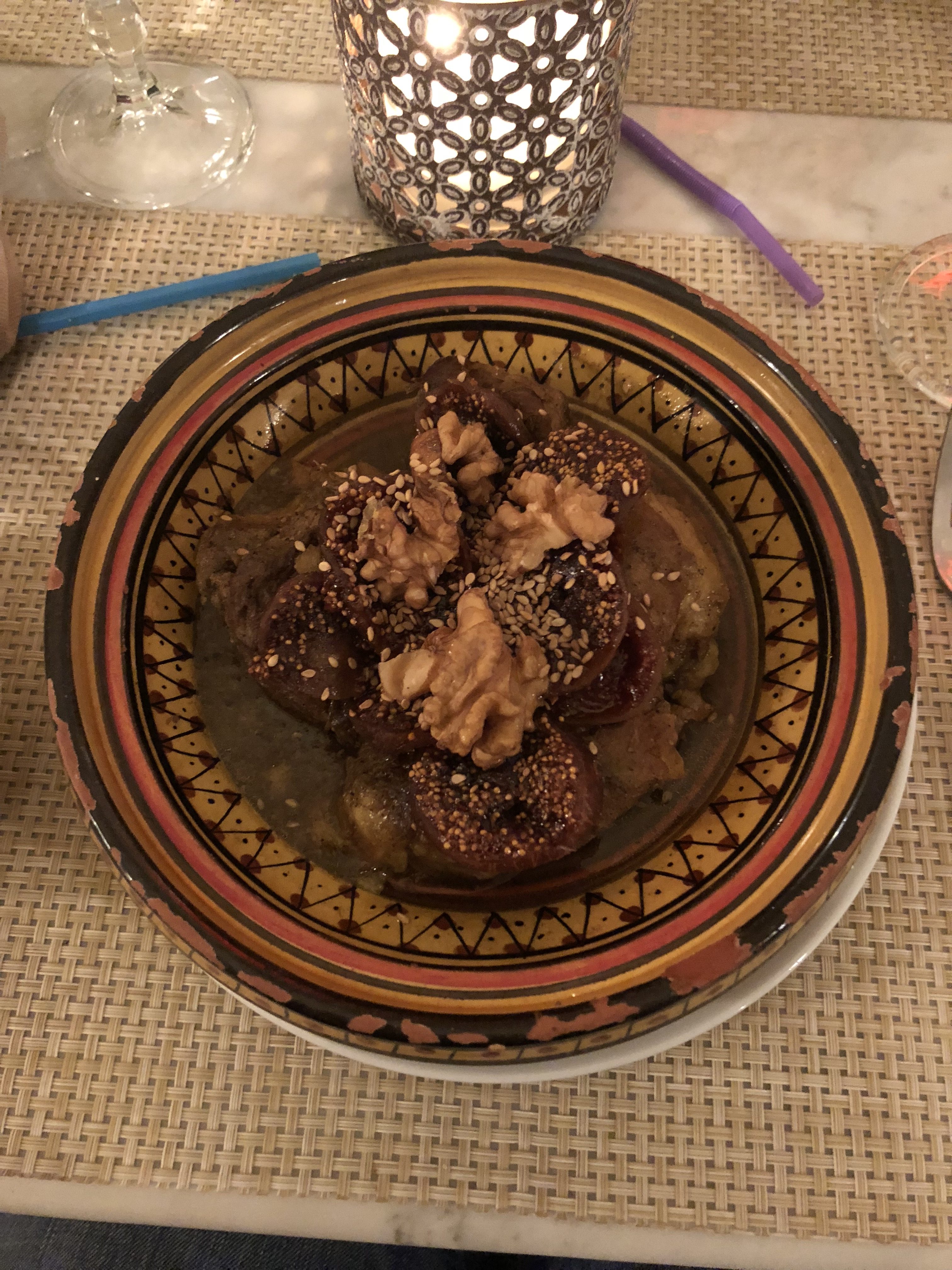
Lamb tagine with prunes and walnuts

We arrived to the longest immigration queue I’ve ever seen, about an hour and twenty minutes to get through but once we finally got out of the airport the sun was setting which was stunning. A short cab ride later we arrived at the beautiful Riad Nashira, where we were staying for three nights. We were tired but instead of chilling at the riad we opted for their restaurant recommendation and went to a cute little Italian/Moroccan fusion restaurant. When you arrive in Marrakech most hotels recommend a guide take you for your first few trips as the medina of Marrakech can be quite daunting, and very easy to get lost in. We arrived at what looked like a door in the wall but once inside it opened up into the beautiful space with trees and mismatched furniture. We both opted for tagines, one lamb, one chicken. The couscous that arrived with it, I simply cannot even explain how good it was. Pretty sure it had butter added to it as it a rich yellow colour and the flavour was absolutely divine. The lamb was soft and fell apart as I ate it, and the dried fruit gave an added depth of sweetness.

Sunday. Breakfast at Riad Nashira was brilliant. So much to choose from, I didn’t know where to start. Fresh fruit, eggs, bread, quiche, salad, coffee, tea and juice, basically everything, a little bit like a buffet. Weirdly the Moroccans love cake at breakfast time, we didn’t add that into our feast. We then went out exploring, the hotel guide showed us how to get to the medina. All the little alleyways and streets look exactly the same so it’s easy to see how people get lost. We sampled our first mint tea in the Kasbah district. The sugar is insane and was unexpected. In Morocco they also pour mint tea from a height so that it forms a foam on the surface. Note: ask for it without any sugar, we also skipped lunch. We then visited the secret gardens of Marrakech. We were pretty tired on our return so headed to Café Arabe which is perfect for drinks with a view but the food was average. We fancied going for a glass of wine which is why we opted for this location, reviews were mixed but sometimes you’ve just gotta go with it. Being a Muslim country alcohol isn’t routinely served, many restaurants and hotels do have a licence though.

Food delivery truck in the Kasbah district of Marrakech

Tagines cooking our lunch at Ouzoud Falls

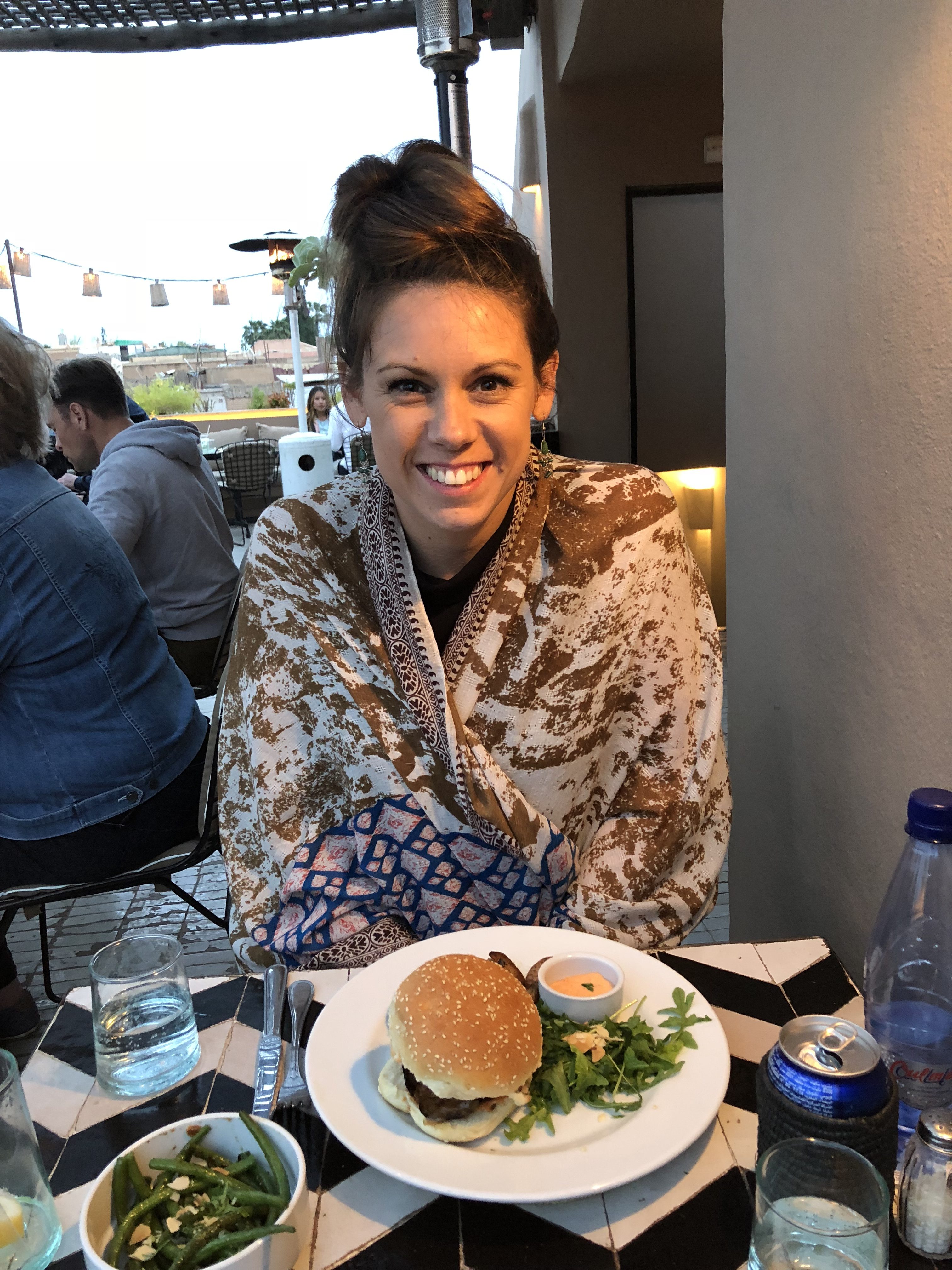
Monday. An all day trip to Ouzoud Falls, three hours each way, took up most of the day. This is a trip I would recommend to anyone, we also ate more tagines, couscous and Khobz (this is the handmade bread which is sold by street vendors and in restaurant they supply by the bucketload to your table). It has a crisp crust but is soft in the middle, it can be made with any type of flour. Dinner was at Nomad. We had tried to get in here for lunch the day before but it was fully booked. Despite it being freezing, even though they had patio heaters, the sunset was gorgeous and the food very tasty. I opted for the Moroccan spiced lamb burger, we had a side of green beans which were crunchy, garlicky and I finished the entire bowl! Nomad is just around the corner form the spice quarter, and that’s one thing about Morocco that is inspiring, their use of spices gives so much flavour.


Moroccan spiced lamb burger at Nomad 

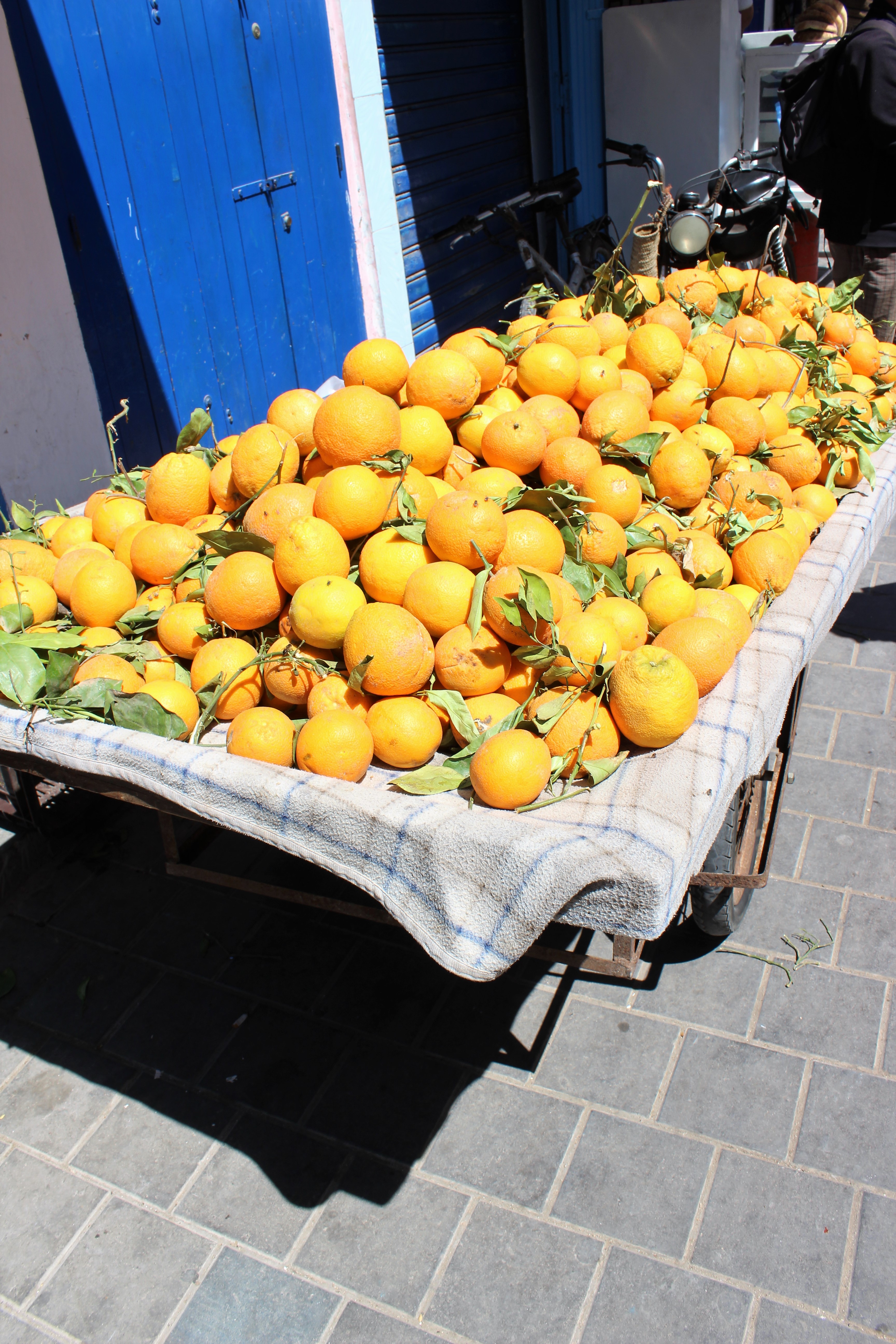
Tuesday: a 3 hour bike tour around the city with an orange juice stop in the square while we watched the henna ladies and snake charmers, followed by shopping in the souks. Bartered and got a gorgeous Moroccan rug. We lunched at Le Jardin, (by the same owner as Nomad). The kefta tagine had been on my list of foods to try, minced beef with eggs, a bit like shakshouka but with meat instead of veggies, also with couscous.

What’s very prevalent is fruit juice. There are markets stall selling it everywhere, its automatically poured at breakfast and is on every restaurant menu. It’s no surprise with alcohol not being served, but I couldn’t help to think about all the sugar. And also meat, there is lots of meat, be very prepared for that. And for for everyone trying to sell you everything, takes a few days to get used to.

Foodie highlights

  • Mint tea, lamb tagine, lamb burger at Nomad, kefta tagine, and bike tour with a pit stop for juice!

Non-foodie highlights

  • Bargaining in the souks, Ouzoud Falls, beautiful Riad Nashira

More to come on our next stop in the beach side haven of Essauira soon…..

HARISSA CHICKPEAS

By Recipes No Comments

Serves 2

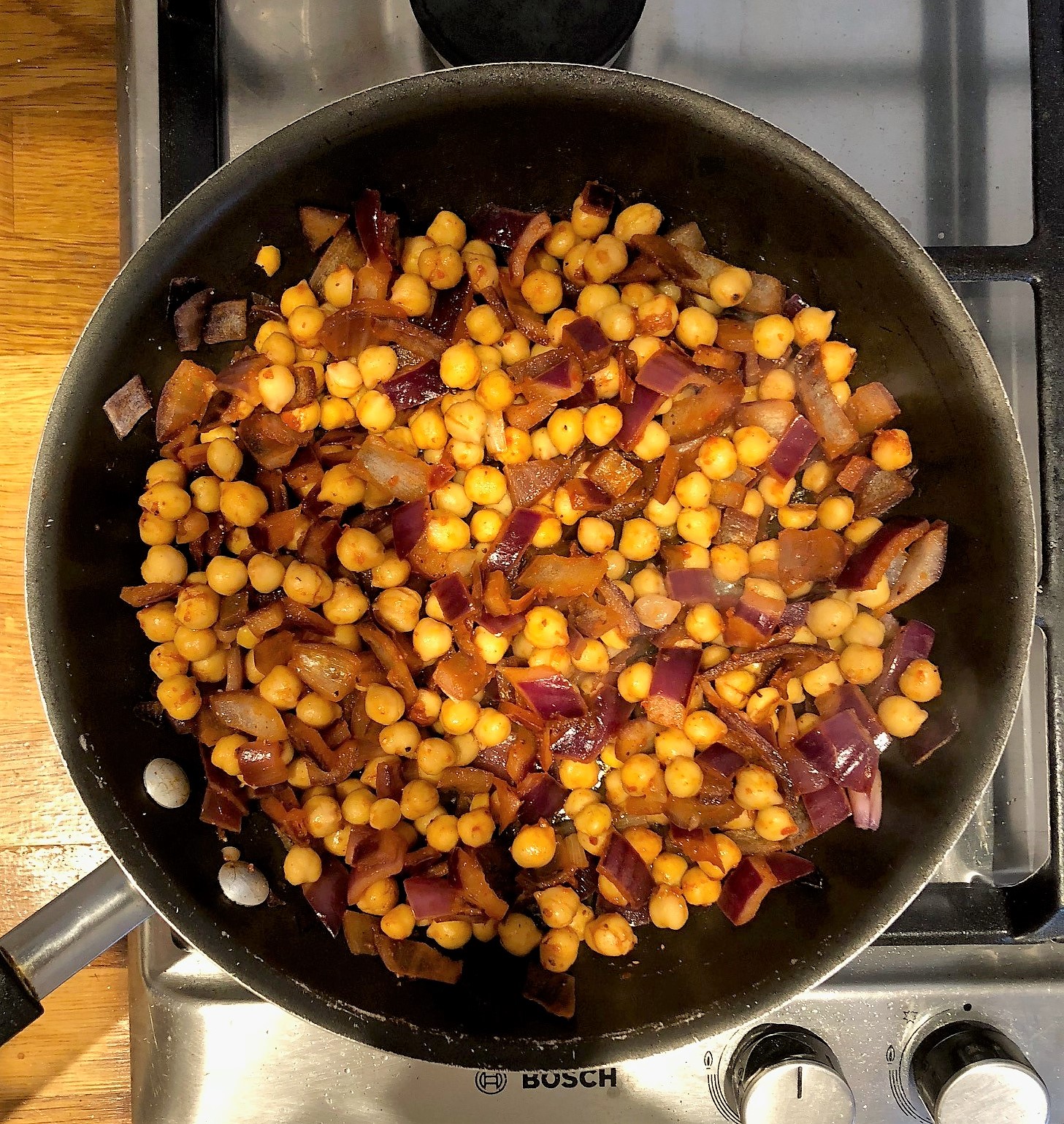
This is the perfect accompaniment for a main meal. Chickpeas are extremely versatile, cheap and nutritious. Just half a tin contains around 150 calories and 9 grams of protein. By comparison a medium chicken breast contains roughly 30 grams, so for a plant source of protein this is pretty good! And fibre – you’ll find over 7 grams, we are supposed to be getting 30 grams per day, that’s over 20% just from half a tin. This recipe has just 4 ingredients (excluding salt and pepper) and can be an easy store cupboard staple! I often enjoy this with some pan-fried chicken, alternatively grilled halloumi would also be delicious. Just be careful with oil and ensure you only add one teaspoon to the pan, its so easy to go a little overboard and with something like oil that can mean excess fat and calories for really no reason at all!

INGREDIENTS
1 red onion
1 tin of drained and washed chickpeas
Rapeseed oil
3 teaspoons harissa paste
Salt and black pepper

METHOD
Peel and roughly chop the onion
Heat 1 teaspoon of oil in a large frying pan
Add onion and cook over a medium-low heat for 10 minutes
Drain chickpeas and rinse under cold water
Add them to the pan with a pinch of salt and pepper
Stir
Add in harissa and a dash of water, then mix together, turn heat to low and continue cooking for 10-15 minutes. If the mix becomes really dry just add a little more water.
Store in the fridge for up to 4 days